

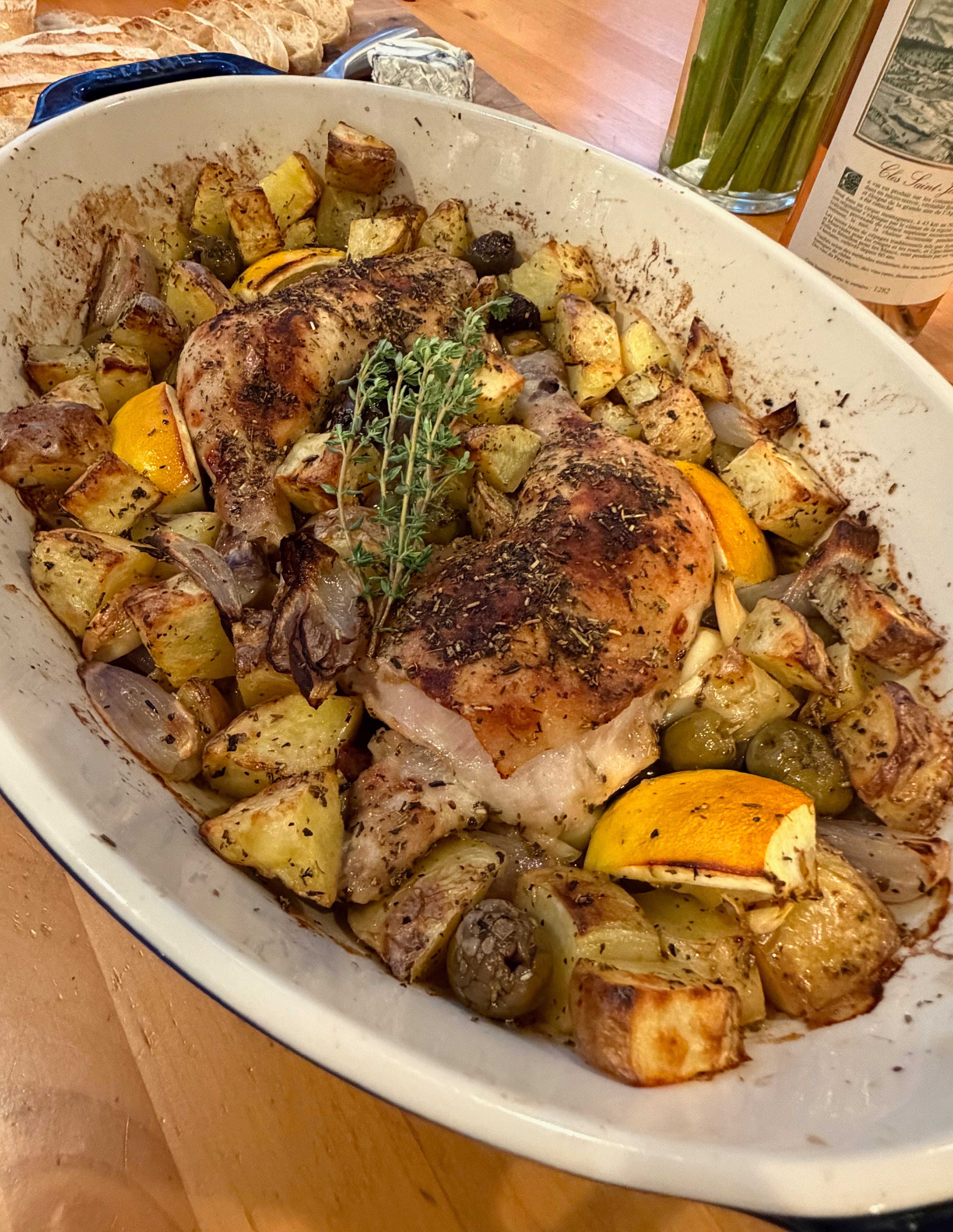
The Recipe: Chicken Provençal
Serves 2 · 15 minutes hands-on, about 75 minutes total
Why this pairing: Garrigue. That’s the wild, herb-covered scrubland of southern France, and it’s all over these vineyards. Thyme, rosemary, savory, marjoram, and oregano grow there in abundance, the same aromatics that go into this dish. When a wine and food share aromatic compounds, they complement each other. What grows together goes together. This started as a New York Times recipe; I added the olives and potatoes to make it a one-pan meal.
You’ll need:
2 whole chicken legs (or 4 thighs)
2 teaspoons kosher salt
1 teaspoon freshly ground black pepper
½ cup all-purpose flour
4 tablespoons olive oil, divided
2 tablespoons herbes de Provence, divided
1 lemon, quartered
8 cloves garlic, peeled
½ cup Niçoise olives (or Kalamata), pitted
4 shallots, peeled and quartered
2 Yukon Gold potatoes, cut into 1-inch cubes
½ cup dry vermouth
Fresh thyme sprigs, for serving
Do this:
Preheat the oven to 400°F. Swirl 2 tablespoons of the oil in a 9×13 baking dish or a 12-inch oven-safe skillet.
Season the chicken with salt and pepper. Dredge it in flour and shake off the excess. Place the chicken skin side up in the dish and sprinkle with 1 tablespoon of the herbes de Provence.
Arrange the garlic, lemon, shallots, and olives around the chicken. Toss the potatoes with the remaining oil and 1 tablespoon herbes de Provence, then spread them around the dish, leaving the chicken uncovered. Pour the vermouth into the dish around the chicken, not over it, so the skin stays crisp.
Roast for 45 to 60 minutes. Halfway through, stir the vegetables and baste the chicken with the pan juices.
The chicken is done when the thickest part of the thigh reads about 175°F, the juices run clear, and the skin is crispy. Squeeze the roasted lemon over everything and garnish with fresh thyme.
Plate it, pour the wine!
Printable recipe card below.

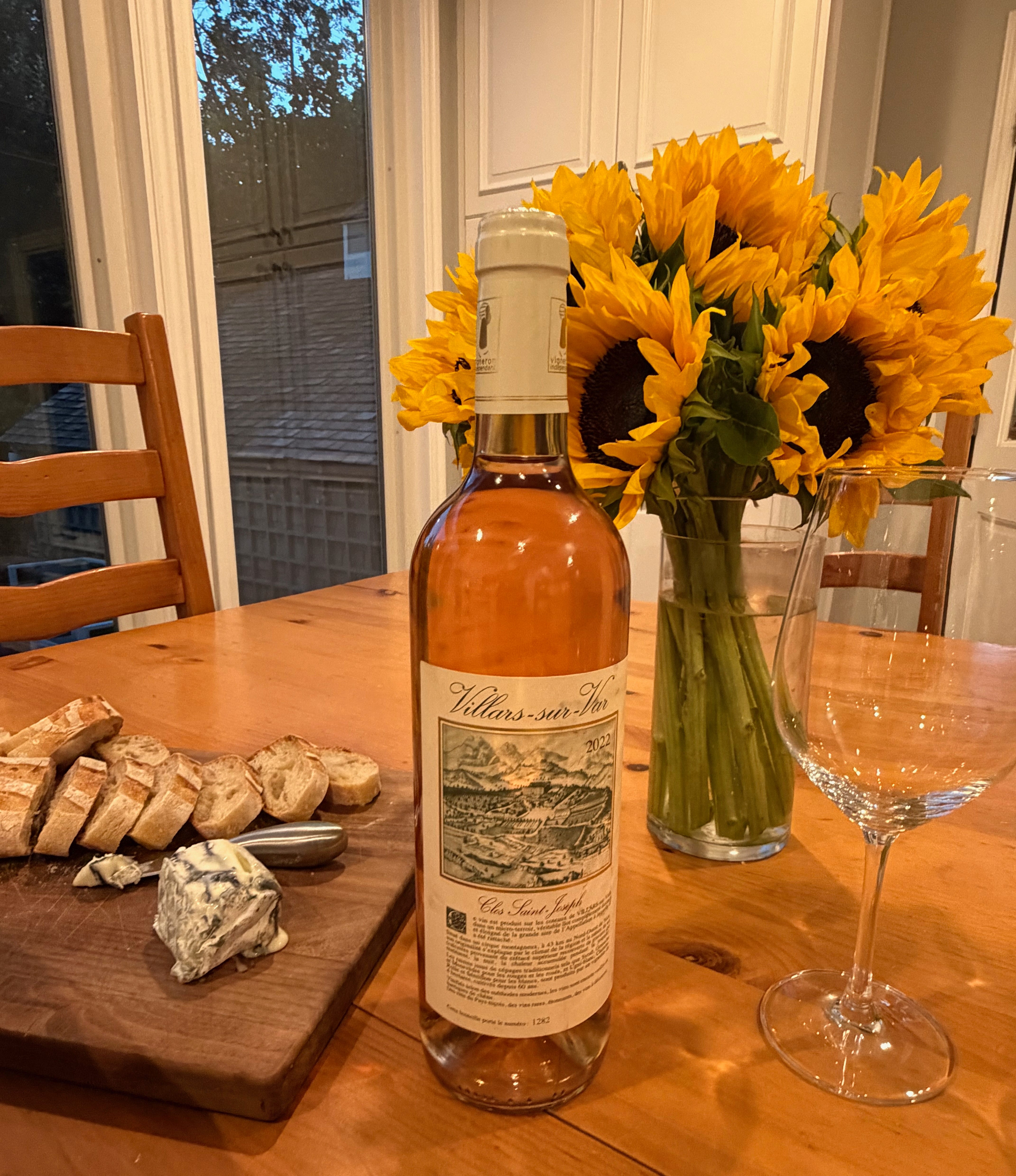
The Pour
Clos Saint Joseph, Côtes de Provence Rosé, 2022 (or the current vintage)
It’s dry and medium-bodied, with notes of rhubarb, melon, and fresh herbs. The texture is almost velvety. It’s a great food wine for Mediterranean dishes, grilled foods, and herb-driven cooking. Serve it chilled but not ice-cold so that texture comes through. About $40. Any dry Côtes de Provence rosé, around $15 to $20, will work in its place.
The One Thing to Know
Provence rosé is a dinner wine that happens to be great by the pool. Its acidity and herbal edge stand up to roast chicken, grilled lamb, and even wild game.
Tuesday, but nicer.